How to Choose the Right Buyback & Trade-In Software in 2026

Cullin McGrath
Chief Executive Officer
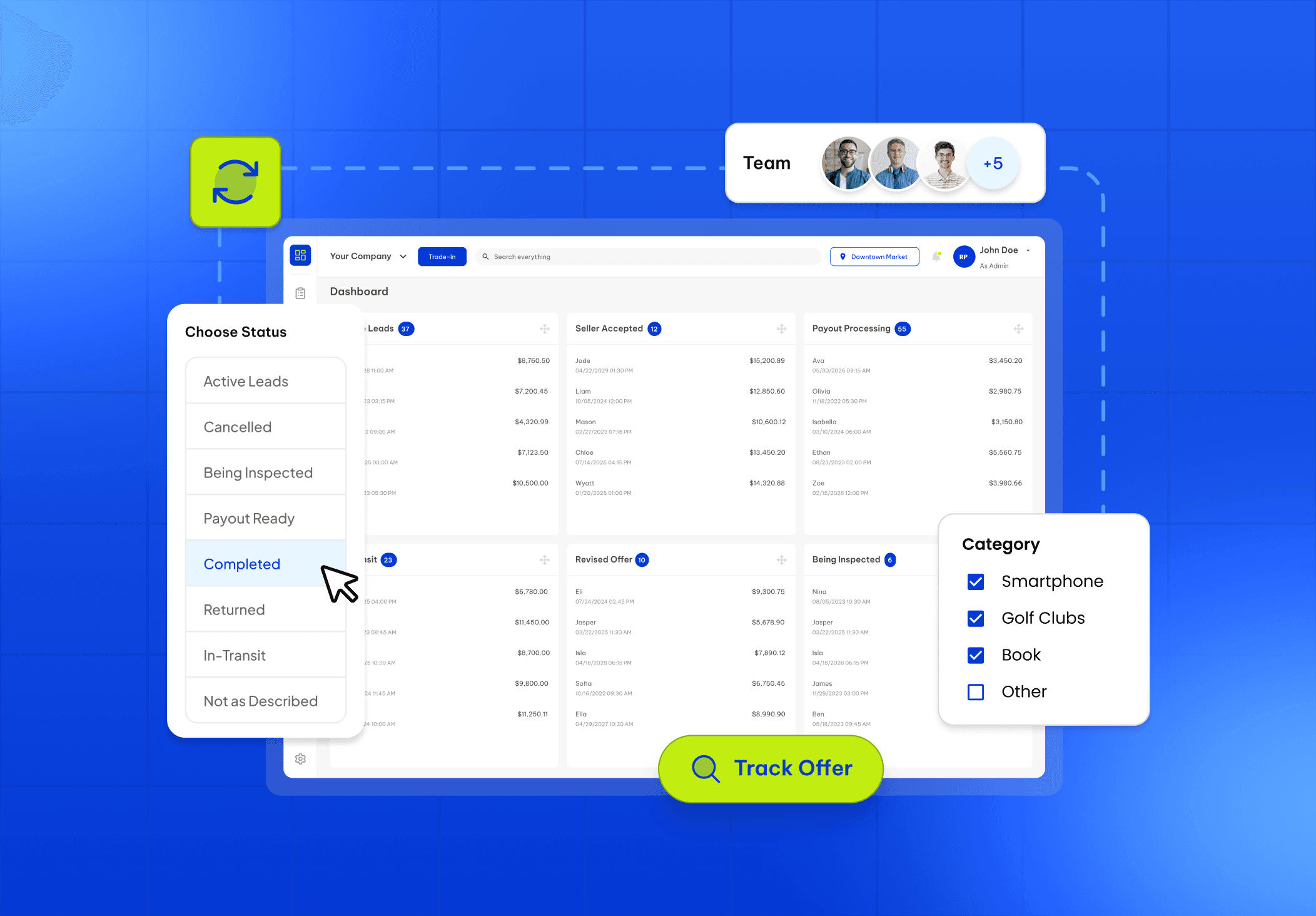
The software behind a buyback and trade-in operation plays a critical role in how efficiently retailers manage submissions, pricing, inventory, logistics, customer communication, and day-to-day workflows. Not all platforms are designed to support long-term growth. Some may work for basic programs, but become difficult to scale as transaction volume and operational requirements increase.
Before selecting a solution, retailers should evaluate factors such as catalog flexibility, workflow management, automation, operational visibility, fraud prevention, and item-level tracking. The following guide outlines the key capabilities to consider when choosing buyback and trade-in software in 2026.
1. Large and Expandable Catalog
Buyback and trade-in programs are rarely static. As customer demand changes, retailers often expand into new product categories and brands. What starts with a single category today may grow into a much broader program over time.
For this reason, retailers should avoid choosing software with a limited catalog, as it may restrict future growth. A platform should be able to support new categories, additional brands, and evolving business needs without requiring a complete operational overhaul.
It is also important to evaluate how the platform handles niche inventory. Some businesses specialize in products that may not exist in a standard catalog. Software that supports custom catalogs and category expansion can provide greater flexibility as trade-in programs evolve.
2. Start Small and Scale Later
Launching a buyback or trade-in program can feel overwhelming, especially for businesses entering the market for the first time. Retailers often assume they need to support multiple categories, manage large inventories, and establish complex operational workflows from day one.
In reality, successful trade-in programs often start with a single category and expand over time. A retailer may begin by accepting just one brand of smartphone, golf clubs, or laptops before gradually adding additional products based on customer demand and operational readiness.
Software should make it easy for retailers to expand their programs without having to rebuild workflows as requirements evolve. The right solution should make it easy to launch a focused program today while providing the flexibility to add new categories, brands, locations, and workflows in the future. This approach allows businesses to learn, optimize, and scale at their own pace without committing to a heavy setup from the beginning.
3. Support Custom Categories
A business that initially accepts smartphones may later expand into laptops, tablets, appliances, sporting goods, or other products as customer demand evolves. Managing multiple trade-in categories can become difficult when each one requires separate workflows, tools, or systems.
When comparing software, retailers should look for a platform that can support different product types within a single environment while maintaining consistency across the operation.
It is also important to evaluate how easily additional categories can be introduced as business needs change. Not every trade-in program fits into a standard category. Some businesses specialize in niche inventory, industry-specific products, or unique buyback opportunities. The right platform should provide the flexibility to support custom categories and specialized catalogs when needed.
Supporting both standard and custom trade-in categories allows businesses to expand into new markets, test new programs, and respond to changing customer demand without having to rebuild processes every time a new opportunity emerges.
4. Single Platform for the Entire Workflow
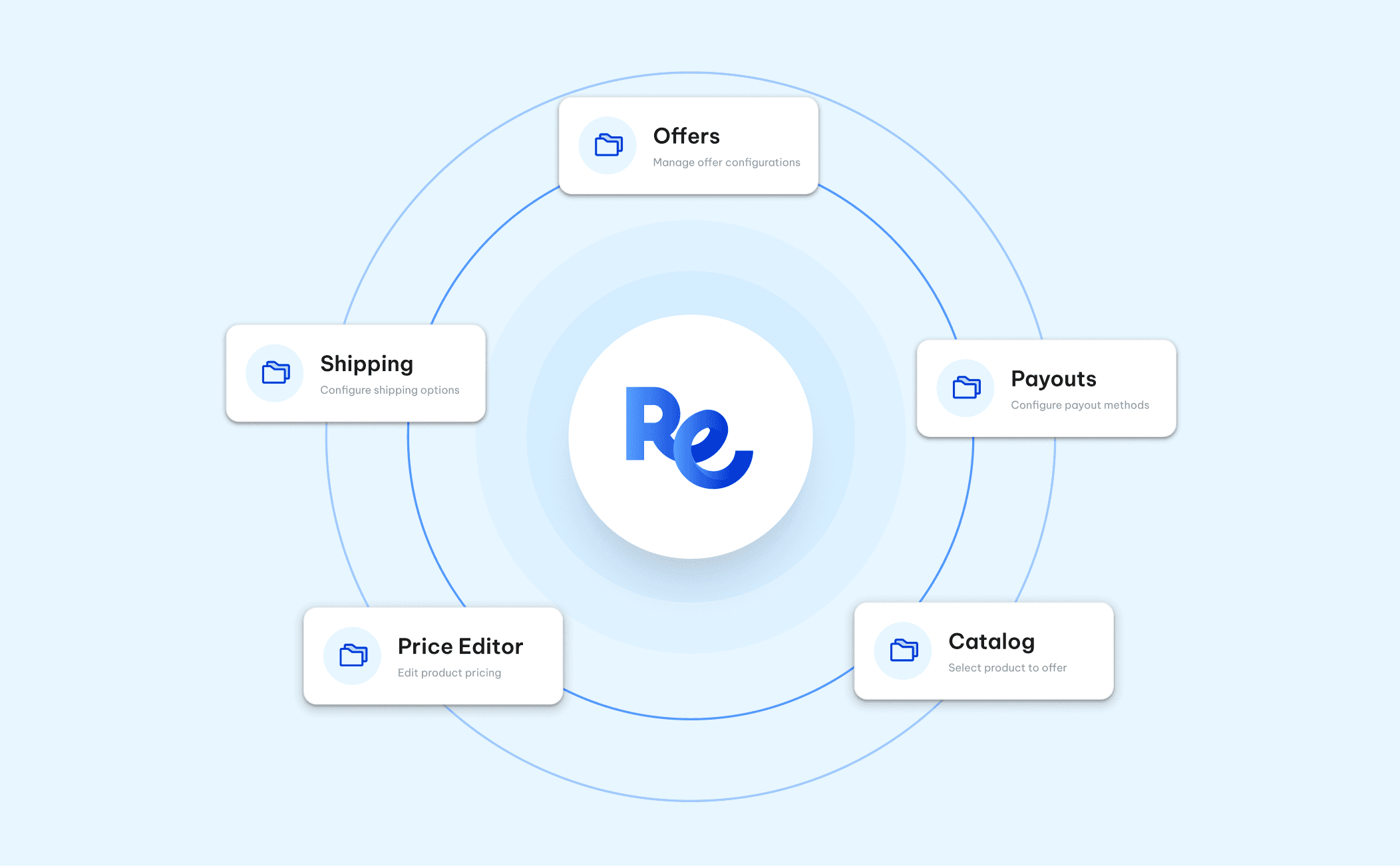
Buyback and trade-in operations involve many moving parts, including customer submissions, offer tracking, inventory management, invoicing, shipping, and payouts. Managing these activities across spreadsheets, inboxes, and disconnected tools can create unnecessary complexity and increase the risk of errors.
It is important to evaluate software that integrates the entire workflow into a single system. Centralized operations help teams manage offers, used inventory, invoicing, payouts, and customer activity from a single source of truth. This approach improves visibility across every stage of the process while reducing the operational overhead associated with manual coordination.
Retailers also need to consider how the platform supports pricing consistency and operational control. Features such as bulk pricing updates, role-based access controls, and permission management can help teams maintain pricing accuracy, protect margins, and ensure the right people have access to the right functions. As operations become more complex, these capabilities help businesses maintain accountability and run consistent operations across staff, locations, and product categories.
5. Automation That Reduces Manual Work
Manual processes can quickly become a bottleneck in buyback and trade-in operations. Tasks such as status updates, shipment tracking, pricing reviews, and customer communication consume valuable time when handled manually. Retailers need software that can automate routine workflows to reduce repetitive work, improve consistency, and minimize the risk of human error across the operation.
However, not every situation should be handled automatically. Some tasks, such as inspection discrepancies, payout exceptions, and other edge cases, may still require human review. For this reason, buyback and trade-in software should combine automation with clear visibility and manual controls when intervention is needed.
6. Operational Visibility and Reporting
Retailers need to know which tasks are working, which are stuck, and which need attention across every buyback and trade-in channel. Buyback and trade-in software needs a reporting feature that provides real-time visibility into trade-in volume, conversion rate, cycle time, and payouts.
The reporting feature will simplify the work by putting the operational truth in one place, where retailers can answer customers’ questions instantly. It is also important to look for buyback and trade-in software that tracks all activities in real time. This feature will help teams maintain accurate records and generate more reliable reports.
Beyond reporting, day-to-day operations require teams to make decisions quickly and stay aligned. Shared visibility across offers, inventory movement, payouts, and customer activity helps reduce miscommunication and keeps workflows moving efficiently. When everyone works from the same information, teams can resolve issues faster and maintain a more consistent trade-in experience.
7. Buyback Widget for Existing Website
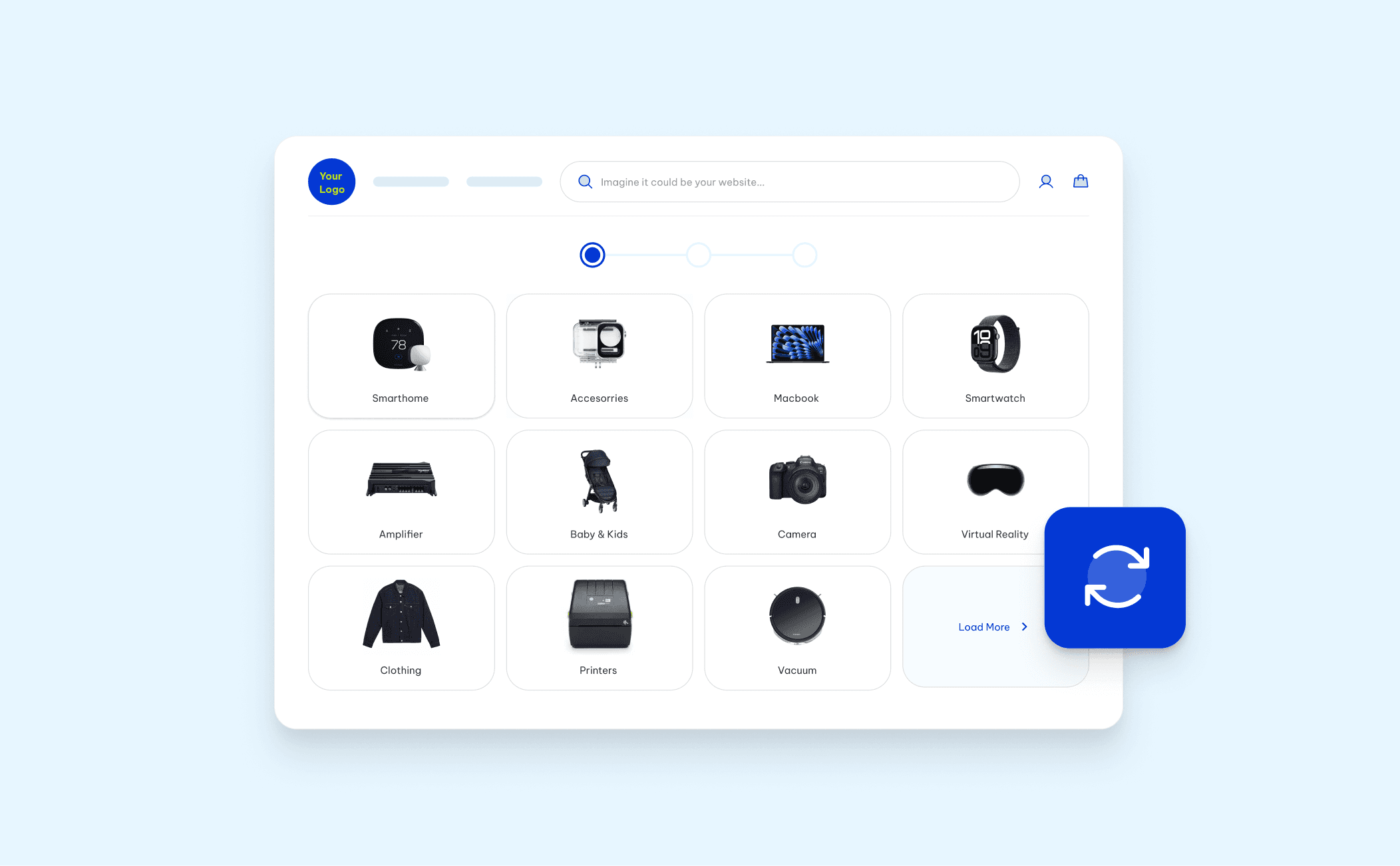
Launching a buyback or trade-in program does not necessarily require rebuilding an existing website or developing a custom trade-in portal from scratch. Businesses need a solution that integrates with their current website and provides a plug-and-play buyback widget for any website builder or CMS, including Shopify, WordPress, Wix, and Squarespace.
Make sure the buyback widget generates instant estimated pricing for the product, no waiting, no manual review. This buyback widget should also support customizable branding, so retailers can tailor its appearance to improve the customer experience.
An embeddable buyback widget can help reduce implementation time while making the trade-in process more accessible to customers. It is worth considering how easily customer-facing tools can be deployed and managed.
A solution that integrates with existing websites can help retailers launch faster, maintain brand consistency, and capture trade-in interest before potential customers leave the site. Customers can enter product details, select a condition, and immediately see an estimated payout.
8. Support Inventory Resale Workflows
Acquiring inventory is only the first step. Retailers need a clear path to resell those items efficiently. The right platform should provide tools to help manage resale pricing, track inventory value, and make informed decisions about when to hold inventory and when to sell.
A strong resale workflow can help businesses convert inventory into cash more quickly while reducing the effort required to manage listings, negotiate transactions, or manually monitor market pricing.
By integrating inventory management and resale activities into a single platform, retailers can maintain greater visibility and operational efficiency throughout the inventory lifecycle. Having a structured path from inventory acquisition to resale can help businesses improve cash flow, reduce holding costs, and maximize the value of purchased inventory.
9. Support Buyback Marketplace Integrations
Not every retailer has an established website or a large volume of direct seller traffic. For many businesses, attracting sellers is one of the biggest challenges when launching or growing a buyback and trade-in program.
Software that supports buyback marketplace integrations can help expand seller reach beyond a retailer's own website. Even businesses without a website can benefit from these integrations by gaining exposure on established buyback marketplaces where sellers actively search for offers.
Buyback comparison websites and marketplaces allow sellers to compare offers from multiple buyers before deciding where to sell their items. Integrating with these platforms can help retailers increase visibility among sellers actively seeking buyback offers. As a result, businesses can acquire more inventory without relying solely on direct traffic or additional marketing efforts.
Managing buyback pricing, supported devices, and condition requirements across multiple comparison websites can become repetitive and time-consuming. Software that supports buyback marketplace integrations should help keep this information synchronized across connected platforms, reducing the need for duplicate data entry and manual updates.
By centralizing pricing and condition logic in one system, businesses can maintain consistency across marketplace channels while expanding their visibility to more potential sellers.
10. Fraud Prevention
Fraud is a predictable part of buyback and trade-in operations that can be managed through structured processes and automated controls. The goal is not to eliminate every risk, but to reduce exposure by moving from a trust-based model to a verification-based one.
Effective fraud prevention depends on visibility and documentation throughout the trade-in process. Software should provide tools for verification, auditability, and recordkeeping, including item tracking, inspection records, customer communication logs, and transaction histories. These records help teams investigate discrepancies, resolve disputes, and identify potential fraud more efficiently.
The ability to access this information from a single system is equally important. When documentation, shipment updates, inspection results, and customer interactions are stored in one place, teams can verify claims faster, maintain clearer accountability, and reduce the risk of fraudulent activity slipping through operational gaps.
11. Chain of Custody and Item-Level Tracking
An important consideration for retailers before choosing buyback and trade-in software is whether the platform provides item-level tracking and chain-of-custody records by default. These capabilities help create a more transparent, accountable, and scalable operation as trade-in volume increases.
Buyback and trade-in operations involve more than tracking inventory quantities. Retailers should be able to track the journey of each item. This Item tracking creates a clear record of what happened to every product throughout its lifecycle. Having a complete history for every item will also help reduce operational risk and support more accurate reporting and compliance.
A strong chain of custody helps maintain accountability across the operation. By assigning a unique identity to each item and recording every status change, movement, and action, businesses can create a reliable audit trail. This visibility can help teams investigate discrepancies, support dispute resolution, and maintain confidence in operational data.
Work with Reusely
Choosing the right buyback and trade-in software is about more than solving today's operational challenges. The right platform should help businesses launch faster, automate routine work, maintain operational visibility, prevent fraud, support inventory resale, and create opportunities to acquire more inventory as the business grows.
The capabilities discussed throughout this guide are exactly what Reusely was built to provide. Reusely brings every stage of the trade-in process into a single, connected platform, while also supporting inventory resale workflows, buyback marketplace integrations, APIs, data feeds, bulk quoting, access controls, and customer-facing buyback experiences. These features allow retailers to build programs that fit their operational needs without relying on disconnected systems or manual processes.
Ready to see what Reusely could look like for your business? Check the latest pricing and available plans here.





" width="1304.414px"/></svg>)