The Reverse Logistics Platform Built for Retail Trade-Ins

Cullin McGrath
Chief Executive Officer
You've built the landing page. You've set up the quote flow. Customers are filling out forms, getting valuations, and clicking submit. On paper, your trade-in program is alive.
But then you check the numbers. Of every hundred quotes you generate, how many items actually show up at your door? Fifty? Thirty? Less?
That gap is not a marketing problem. It is not a pricing problem. It is an operations problem. And it is the problem that a reverse logistics platform built for retail trade-ins is specifically designed to close.
Reusely is built as a trade-in operating system: the infrastructure layer that connects the moment a customer creates a quote to the moment that item is graded, processed, and sitting in your inventory ready to resell. That stretch between those two moments is where most trade-in programs quietly bleed revenue, and where Reusely's operational workflow runs.
Most Trade-In Programs Lose Customers Before the Item Ships
Here is the metric most trade-in programs are not tracking: the conversion rate from Quotes Created to Items Received.
You probably track quotes. You probably track items received. But the ratio between them is the real health indicator of your program's operational efficiency. If you are generating 1,000 quotes a month and receiving 400 items, you are not running a 40% conversion rate. You are running a program that hemorrhages 60% of its potential inventory before it even reaches you.
This drop-off is not customers changing their minds about the trade-in concept. They opted in. They spent the time to fill out a form, get a valuation, and commit to the process. What kills the transaction is everything that happens after the form is submitted: the confusion about how to ship, the silence that follows, the quiet erosion of trust when a program feels improvised.
The retailers who solve this are the ones who stop treating the quote as the finish line and start treating it as the starting gun.
Why Customers Drop Off After Getting a Quote
Abandonment after quoting happens for three reasons, and none of them require a marketing fix.

What a Reverse Logistics Platform Does in a Trade-In Program
The term "reverse logistics" usually calls to mind returns: a customer sends something back, you figure out what to do with it. That is part of the picture. But a reverse logistics platform built for trade-ins has a different job.
In a trade-in context, the platform does not just process inbound items. It manages the entire operational workflow from the moment a customer creates a quote, including the steps that happen before the item ever leaves their hands.
Reusely handles this as a connected system:
Automated Pricing Engine: Rules-based pricing that stays consistent across conditions, items, and channels. When a customer submits a quote, the price they see is generated by the same logic that will govern their final payout. No surprises when the item is received.
Logistics and Label Generation: Shipment tracking without manual processes. Pre-paid labels generated automatically, with routing across 150+ integrated shipping providers.
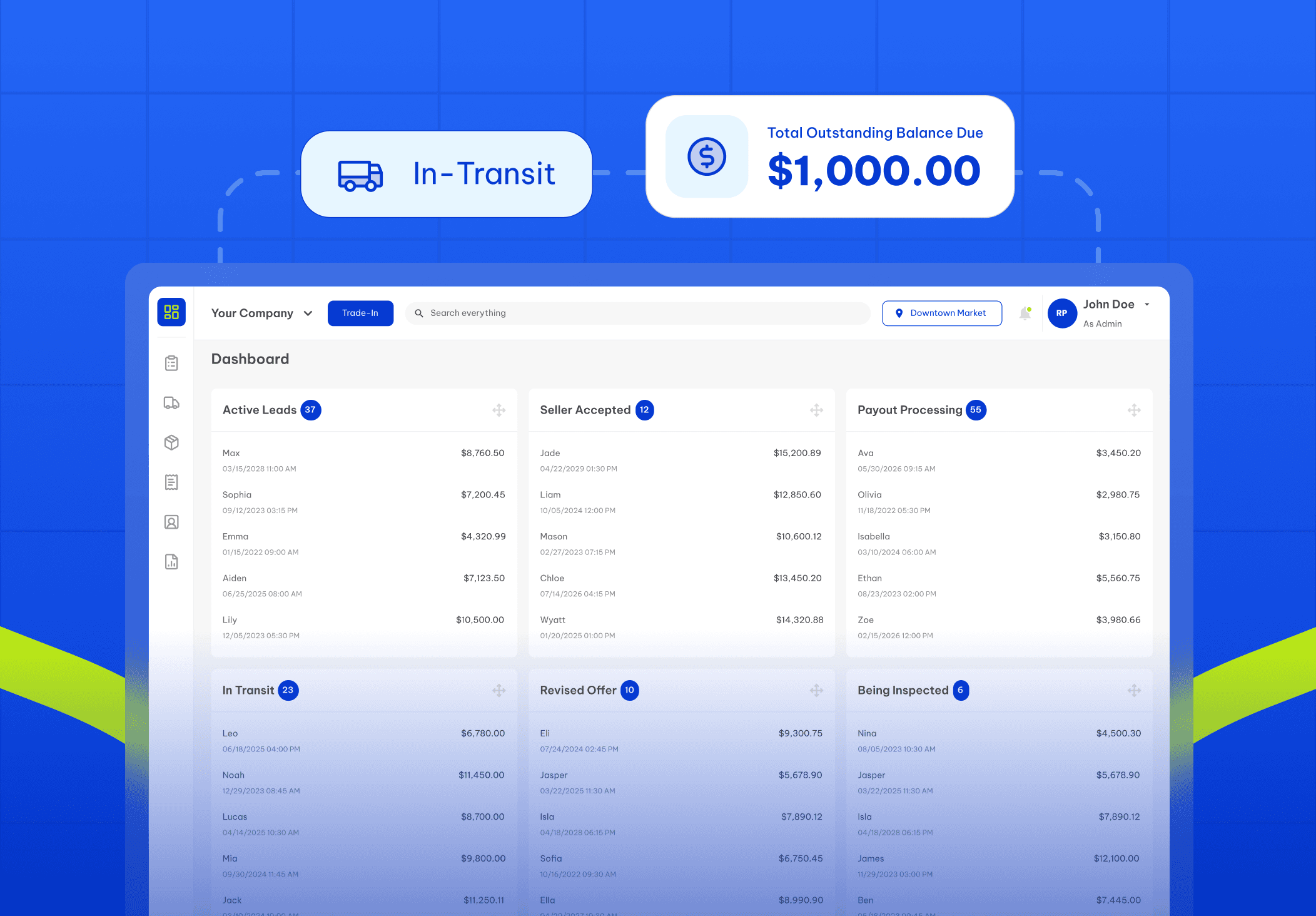
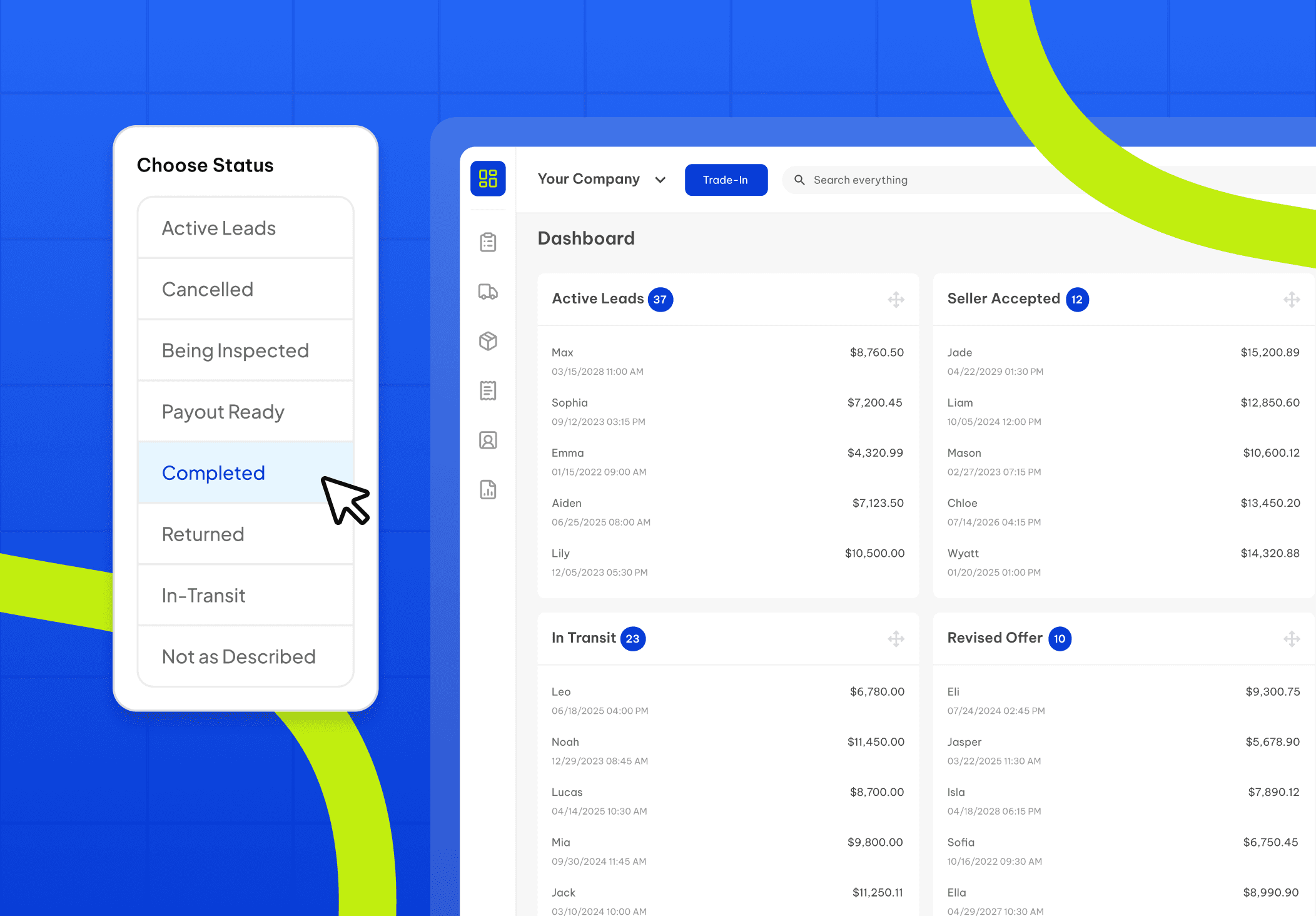
Offer and Workflow Tracking: Every quote has a status. Every action, from acceptance to label generation to shipment to receipt, is logged. Retailers see exactly where every item is in the funnel at any point.
Inventory Management: From the moment an item is received and graded, it flows directly into inventory tracking. No spreadsheet hand-off, no manual entry.
Payout and Completion Flow: Once the item clears inspection and condition grading, the cash payout is triggered through a clear, documented sequence.
This is what separates a reverse logistics platform from a collection of tools duct-taped together. Each step feeds the next. The data from pricing informs the inspection criteria. The inspection outcome triggers the payout. The payout closes the workflow and updates inventory. The whole thing runs without a coordinator manually moving items between systems.
Automated Tracking Turns Abandoned Quotes Into Shipped Items
The conversion math changes when automation handles the operational loop.
When a customer's label is generated automatically and their shipping deadline is clearly communicated from day one, you remove the two most common reasons for abandonment: friction and forgetting. When they receive a reminder before their label expires, you recover the customers who intended to ship but got pulled away. And when the item arrives and is graded against consistent, pre-disclosed criteria, with the payout triggered automatically, you eliminate the condition disputes that erode trust in the program long-term.
Research on automated email sequences shows that triggered messages achieve a 42.1% open rate compared to 14.5% for standard batch sends, nearly three times higher (Omnisend, 2025). Deadline-driven notifications for trade-in labels work on the same principle: a timely, contextual message from a customer who has already opted in is far more effective than a generic follow-up.
Reusely's Offer and Workflow Tracking handles this notification layer as part of the same system that manages pricing and logistics. There is no separate email tool, no manual trigger, no operations manager remembering to follow up. The workflow runs on its own.
The downstream effect reaches your inventory directly. When items ship at a higher rate, your Inventory Management system fills faster. When condition grading is applied consistently at intake, against the same criteria the customer saw when they got their quote, there are fewer disputes and faster processing. The $15M+ in trade-in value processed through Reusely's platform reflects what this operational loop looks like at scale: hundreds of programs, across multiple categories, running without the overhead of manual coordination.

From Quote to Inventory: What the Operational Loop Looks Like
In a program running on Reusely, the sequence looks like this:
A customer visits your site and submits a trade-in through the Buyback Widget. They get an instant valuation based on the pricing rules you have configured. They accept the quote.
A pre-paid shipping label is generated automatically and sent to the customer. The label is tied to a deadline, visible to the customer through the Customer Portal. A notification goes out 72 hours before expiry.
The item ships. The tracking number updates automatically in Offer and Workflow Tracking. Your team sees the inbound item in the queue before it arrives.
The item is received and graded against the condition criteria from the original pricing rules. If the item matches, the cash payout is initiated immediately through the Payout and Completion Flow. If there is a condition discrepancy, the documented audit trail from the Automated Pricing Engine provides the evidence for the review.
The item enters inventory through Inventory Management. It is available to sell. The trade-in is closed.
Your Reporting dashboard shows how many quotes were created this month, how many items were received, and where in the funnel the gap sits, so you can tighten it.
Ready to Stop Losing Items Between the Quote and the Warehouse?
If your trade-in program is generating quotes but not receiving items at the rate you need, the fix is not more marketing. It is a better operational loop.
Reusely is built specifically to run that loop, from the moment a customer submits a quote to the moment the item is in your inventory. You can start for free and configure your first program without building internal infrastructure or hiring operations staff.
Try Reusely today and see how much of your current quote-to-receipt gap closes in the first 30 days.






" width="1304.414px"/></svg>)