Why Your Niche Needs More Than a Trade In Button

Cullin McGrath
Chief Executive Officer
If you are a retailer specializing in complex or high ticket items, you know that a generic trade in solution is often worse than having no solution at all. When you are buying back a five thousand dollar Gibson Les Paul or a pre owned Rolex, a simple checkbox for good or fair condition is insufficient. These items require an expert level of appraisal that general trade in plugins simply cannot provide. Most ecommerce tools were built for simple products like clothing or accessories where the variance in condition is minimal. In high value niches, the difference between a minor cosmetic scratch and a functional defect can represent thousands of dollars in resale value.
The one size fits none problem is the primary reason why specialized retailers struggle to scale their buyback programs. If your software forces you to simplify your grading process to fit into a rigid template, you are either overpaying for junk or underpaying and losing legitimate customers. To run a successful program for cameras, drones, luxury goods, or musical instruments, you need a trade-in catalog and software that understand the specific technical attributes of your niche. You need a system that mimics the logic of your best appraiser rather than a system that treats every product like a t shirt.

The Problem with Generic Grading
Generic trade in tools typically rely on three or four broad categories to determine value. This lack of granularity is a significant risk for any business dealing with high variance items. If you use broad categories, you are essentially guessing the value of your inventory before it even arrives at your warehouse.
High Variance Risk: A drone with a missing propeller is a ten dollar fix, while a drone with a dead motor is a total loss. A generic system might flag both as poor condition, leading to an inaccurate quote that either scares away the seller or leaves you with an unsellable unit.
Margin Erosion: When your software cannot account for specific upgrades or premium features, you lose the ability to capture high margin inventory. For example, a guitar with upgraded pickups is worth significantly more than a stock model, but a general tool will value them both the same.
Customer Friction: High value sellers are often experts themselves. When they see a trade in tool that asks overly simplistic questions, they lose trust in your brand. They want to know that you recognize the value of their specific item, including the presence of original packaging, certificates of authenticity, or rare modifications.
Using a tool that is too simple forces your team to do the heavy lifting manually. You end up spending hours on the phone or in email threads correcting quotes because the software failed to ask the right questions at the start.

Handling Complexity in Photography
The photography market is a prime example of where general software fails. A camera is a precision instrument with multiple points of failure that must be evaluated individually.
Shutter Actuations: The lifespan of a professional camera body is often measured by its shutter count. A generic tool might see a pristine exterior and offer a high price, but if the shutter is near its failure point, that camera is a liability. Your software must be able to ask for and verify this specific data point.
Sensor Health: Sensor dust or scratches are deal breakers in the resale market. Your trade in flow should include specific questions about sensor condition and potentially require photos of a white wall test to confirm the quality.
Included Accessories: Professional cameras are rarely sold alone. The value changes drastically based on whether the original battery, charger, strap, and body cap are included. A custom system allows you to add or subtract value for each specific accessory in real time.
By automating these technical questions, you ensure that the quote provided to the customer is as close to the final payout as possible. This reduces the number of rejected offers and improves your warehouse throughput.

Managing Fashion and Luxury Tiers
In the luxury resale market, condition is only part of the equation. You also have to manage the complexities of authenticity, seasonal trends, and brand specific details.
Authenticity Verification: For designer handbags or watches, the presence of an authenticity card or original receipt is a non negotiable attribute. Your software logic should be configured to automatically reject items if these critical components are missing or to adjust the price accordingly.
Strap and Hardware Condition: High end luxury items often have specific wear points. A handbag might have a perfect leather exterior but heavily scratched hardware or a frayed interior lining. Your grading logic needs to break these down into separate attributes to calculate a fair market value.
Seasonal Valuation: The value of a luxury item can fluctuate based on the current season or fashion trends. A custom engine allows you to update your pricing logic for specific brands or styles instantly, ensuring you are not overpaying for items that are currently out of style.
A specialized system allows you to build a questionnaire that feels like a conversation with a luxury expert. This builds confidence with the seller and ensures you are acquiring inventory that fits your specific resale standards.

Sporting Goods and Shipping Logistics
Retailing items like golf clubs, skis, or bicycles introduces a unique set of challenges related to physical size and shipping costs.
Dimensional Weight Management: Shipping an oddly shaped item like a hockey stick or a set of skis is expensive. If your trade in software does not account for the dimensional weight and the cost of a large shipping box, your profit margins will be eaten by logistics fees.
Component Level Grading: A bicycle is a collection of parts. You need to know the condition of the frame, the groupset, and the wheels separately. A custom logic tree allows you to ask about each major component to arrive at a total value.
Club Specific Attributes: For golf retailers, details like shaft flex, loft, and grip condition are essential. A generic tool will not ask if a club is left or right handed, which is a fundamental detail that determines whether you can even resell the item.
Integrating logistics data directly into your trade in software ensures that the shipping cost is factored into the initial quote. This prevents the common problem where a business pays twenty dollars for a trade in that costs forty dollars to ship.
Configuring Logic Without Coding
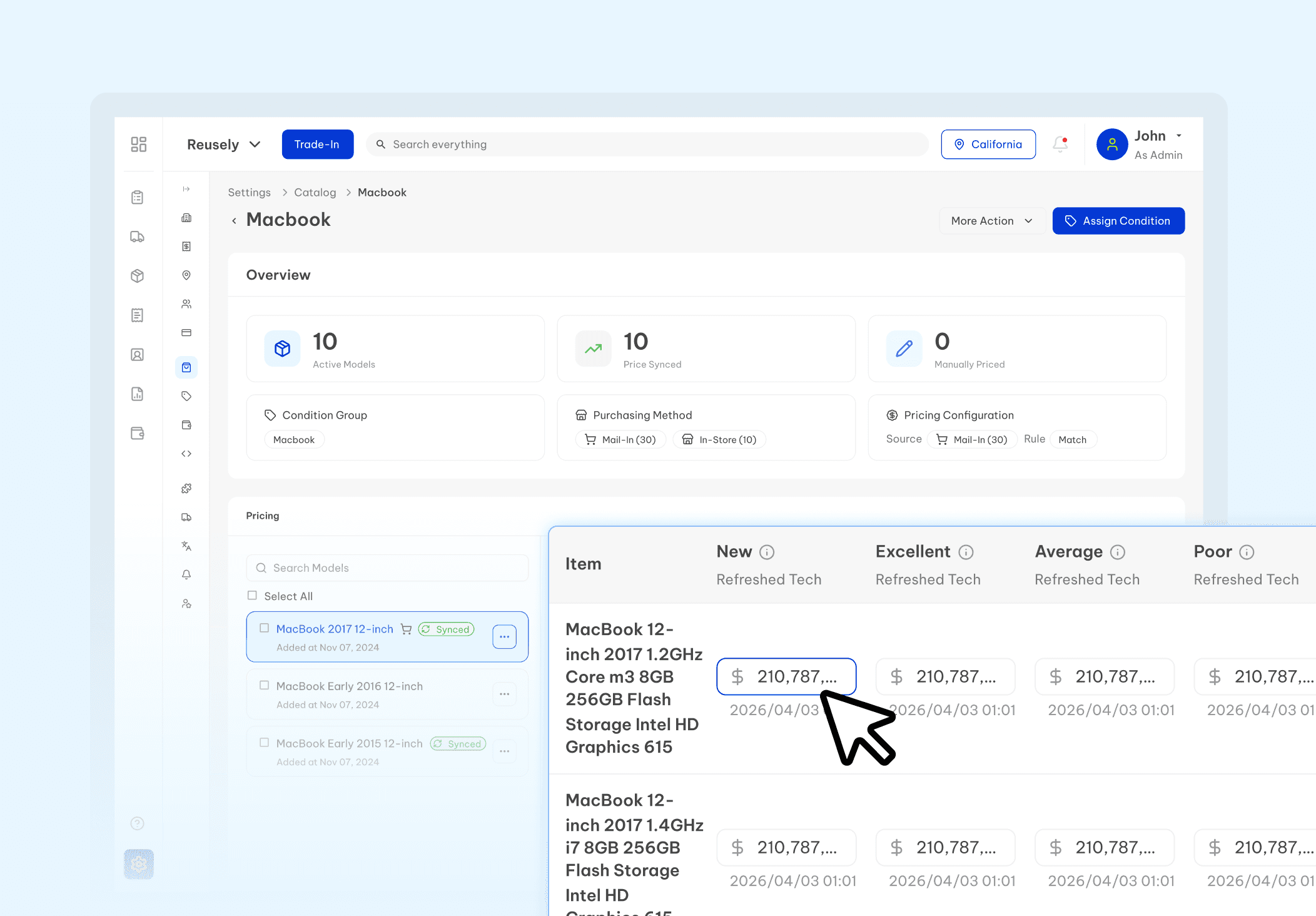
The most powerful feature of a custom trade in system is the ability to build complex logic without needing a team of developers. You should be able to create if this then that rules that match your business expertise.
Custom Attribute Creation: You define what matters for your products. If you sell drones, you can create attributes for flight hours or battery cycles. If you sell watches, you can create fields for service history or original links.
Dynamic Price Adjustments: You can set rules that say if the original box is missing, deduct fifty dollars. If the screen has a scratch, deduct ten percent. This automation ensures consistency across your entire program regardless of who is grading the item in the warehouse.
Question Branching: Your software should only ask relevant questions. If a user selects that they are trading in a digital camera, the system should not ask them about lens scratches unless they also indicate they are including a lens. This keeps the user experience fast and professional.
This level of control allows you to iterate on your pricing strategy as the market changes. You can tweak your logic in minutes rather than waiting weeks for a developer to update your website.
Conclusion: Own Your Niche
Using generic software for a high value niche is a compromise that eventually leads to lost revenue and operational chaos. Your business succeeds because of your specialized knowledge and your ability to curate high quality inventory. Your trade in software should reflect that expertise.
By moving away from simple good or fair categories and adopting a system with custom logic and item level attributes, you protect your margins and build trust with your customers. Do not change your business processes to fit the limitations of a basic plugin. Instead, choose the infrastructure that was built to handle the complexity of your niche.






" width="1304.414px"/></svg>)