Expand Your Phone Repair Business with Trade-Ins

Cullin McGrath
Chief Executive Officer

Every day, phone repair shops inspect devices, diagnose issues, estimate repair costs, and understand how a phone's condition affects its value. Those same skills also make repair businesses uniquely positioned to offer trade-ins.
When a customer decides that repairing a device no longer makes financial sense, the conversation doesn't have to end there. Instead of sending them elsewhere to sell their old phone, your shop can make an offer, add the device to your inventory, and create another revenue opportunity.
Offering trade-ins isn't a completely new business. It's a natural extension of the one you already run.
Why Phone Repair Shops Are Well Positioned for Trade-Ins
Starting a buyback business from scratch means hiring technicians who can judge a device's condition, finding a location customers will show up to, and building trust with people willing to hand over a phone before you've proven yourself. That's three hard problems before you've bought a single device, but you've solved all three already.
Your technicians can grade a device in seconds, spotting a swapped battery or a cracked digitizer without a second look. The counter sees walk-in traffic every day, traffic that never cost you a marketing dollar. And customers trust you enough to hand over a phone and walk away, the kind of trust a stranger-run buyback kiosk spends years trying to earn.
Finding Trade-In Opportunities
Many of the conversations happening at your repair counter already create opportunities for trade-ins. A customer replacing a cracked-screen phone may decide an upgrade makes more sense than another repair. Someone coming in with an aging device might ask whether it's still worth fixing. Instead of ending those conversations with a repair quote, you can offer to buy the device and help the customer move on to their next phone.
For repair shops, trade-ins are a natural extension of the business you already run. Rather than adding an unrelated service, you're building on the expertise you already use every day to expand into trade-ins, refurbishment, and resale.
Capture More Value From Every Customer Visit
Picture a customer who walks in with a cracked-screen phone but mentions they're planning to upgrade anyway. Without a trade-in program, that customer leaves with the same phone they intended to replace, and any opportunity to acquire it goes elsewhere.
With a trade-in program, you can offer to buy the device instead. The customer receives a fair trade-in value toward their next purchase or in cash, while your shop gains a phone that can be refurbished and resold. Even if the repair never happens, you've created another opportunity to generate revenue from the same customer visit.
Many repair shops focus only on the repair itself. By offering trade-ins, the same customer visit can also help you acquire inventory and create another sales opportunity.
Running a Successful Trade-In Program
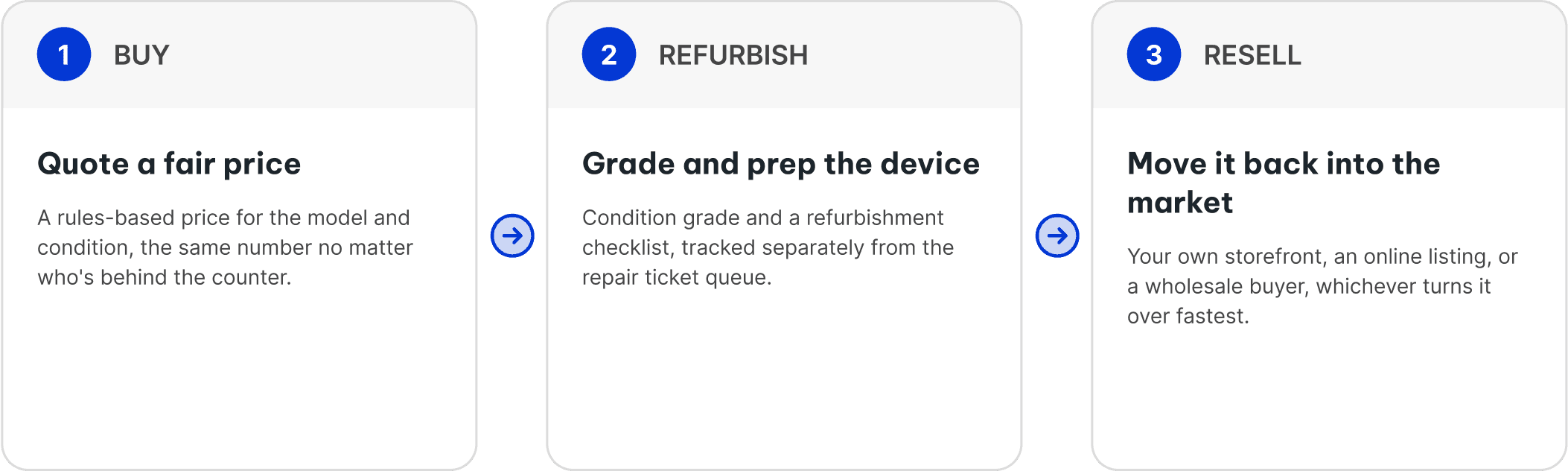
Adding trade-ins doesn't mean hiring a new team or opening a second location. Instead, it introduces a few new workflows into your existing operation. Pricing devices consistently, managing acquired phones as inventory, and processing payouts efficiently all become part of your day-to-day business.
Standardize Device Pricing
Right now, if you quote a repair, you probably have a rate card or at least a consistent way of estimating repair costs. Buying a used phone is different when you're doing it by instinct: one technician might offer more for a cracked iPhone than another technician would the next day, and a customer who compares notes with a friend will notice.
A rules-based pricing system evaluates every device using the same criteria, regardless of who's behind the counter. Customers receive consistent offers, while your business benefits from predictable margins instead of inconsistent pricing decisions.
Manage Trade-Ins as Inventory
Once you've bought a device, it needs a home that isn't your repair ticket queue. Repair tickets are built around one customer waiting for one device to come back to them.
Once you've purchased a device, it becomes inventory. It needs a condition grade, a refurbishment checklist, and a clear next step toward resale, whether that's your own storefront, an online listing, or a wholesale buyer.
Without a clear process, purchased devices can pile up in a drawer rather than generating revenue. Every unsold device ties up cash that could otherwise go toward inventory, parts, payroll, or marketing.
Pay Sellers Quickly
A smooth buyback experience doesn't end when the customer accepts your offer. Your process should support fast payouts while automatically recording what was paid, which device was purchased, and who completed the transaction. That means less paperwork for your team and a better experience for your customers.
Test the Opportunity Before Investing
One mistake many businesses make is building custom intake forms, spreadsheets, or internal tools before proving there's enough demand. Instead, use a workflow that's already designed for trade-ins. Validate demand with your customers first, then refine your process as the program grows. This approach helps you launch your trade-in program faster while avoiding unnecessary development costs.
Power Your Phone Trade-In Business with Reusely
Launching a successful trade-in program involves more than buying used phones. Consistent pricing, organized inventory, and a smooth customer experience all play a role in making trade-ins a profitable part of your business.
Reusely brings those workflows together in one platform, so you don't have to build them yourself. Instead of relying on spreadsheets, manual pricing, or disconnected processes, repair shops can manage trade-ins from offer to payout using a system designed specifically for buyback programs.
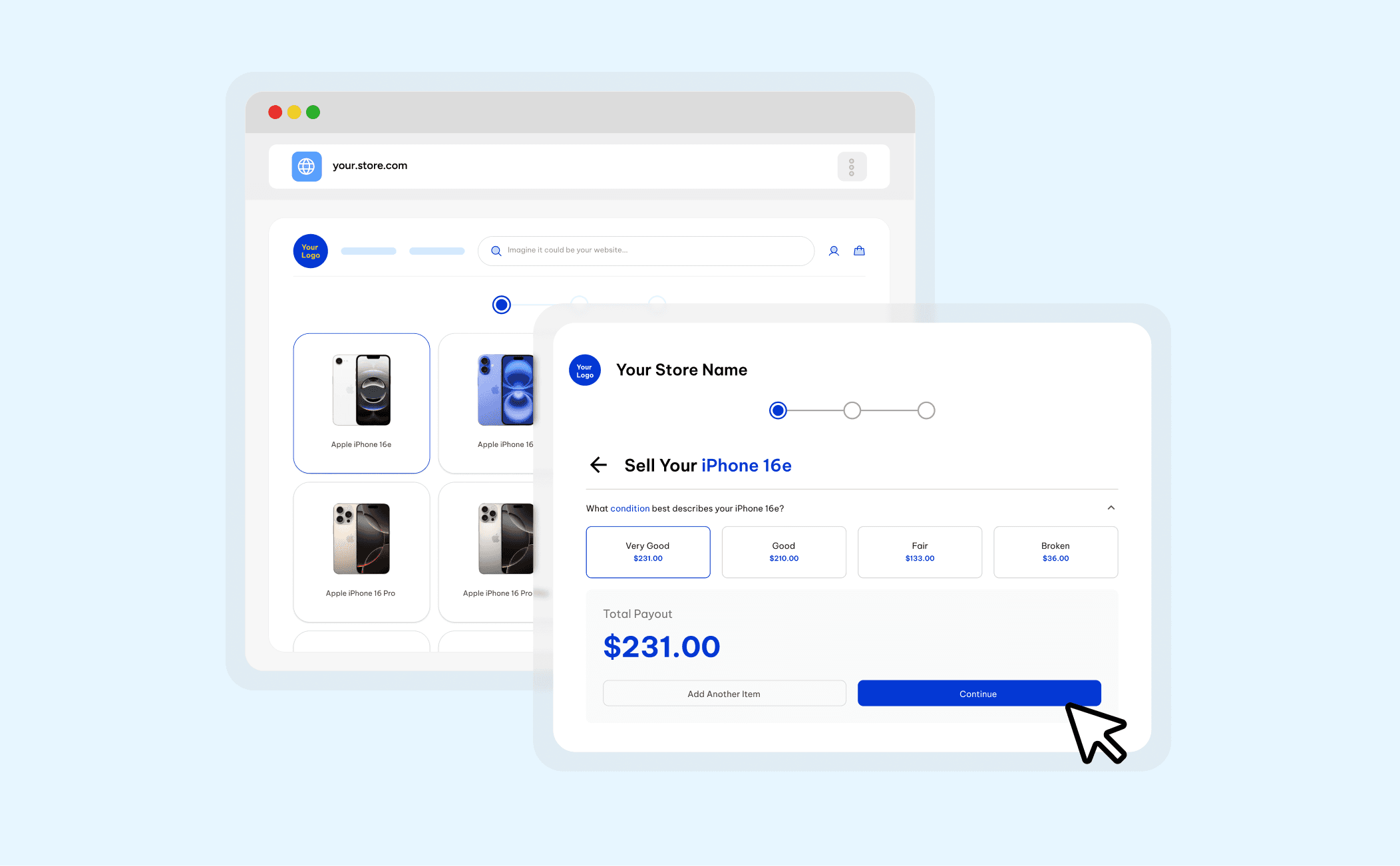
At the center of the platform is the Buyback Widget. Customers can select their device, describe its condition, and receive an instant trade-in offer whether they're visiting your website or standing at your repair counter. Behind the scenes, Reusely uses automated pricing rules to deliver consistent offers based on each device's model and condition, helping every member of your team quote with confidence.
Reusely also keeps every trade-in organized from purchase to resale. Purchased devices, payouts, and transaction records are managed in one place, making it easier to track inventory, process payments, and prepare devices for resale without juggling multiple spreadsheets or manual records.
As your trade-in program grows, Reusely grows with it. Features like white-label branding and advanced workflows help you deliver a trade-in experience that feels like a natural part of your business.
Ready to expand your phone repair business with trade-ins? Explore Reusely's pricing plans or contact the team to learn how the platform can help you launch and manage a successful trade-in program.





" width="1304.414px"/></svg>)