Why iPad Repair Shops Should Consider Trade-Ins

Cullin McGrath
Chief Executive Officer

The expansion of artificial intelligence in recent years has led to a surge in demand for RAM. A recent report stated that global RAM production for 2027 is already sold out. This high demand has created a domino effect across the tech industry. Prices for devices such as smartphones, laptops, and tablets have also increased significantly due to rising RAM prices. In late June 2026, BBC reported that Apple had raised the prices of its tablets and laptops by nearly 20%.
This phenomenon has impacted the consumption patterns in the market. As new devices become more expensive, refurbished and secondhand electronics offer customers another way to upgrade their daily-driver devices without paying full retail price.
The price is not the only reason consumers are considering a used device. Sustainability can add another reason to consider a pre-owned gadget. A Statista survey in October 2025 found that 47% of Gen Z and 40% of Millennials in the U.S. prefer refurbished or secondhand electronics to reduce e-waste.
There are a few alternatives to buying a brand-new gadget in this new normal. More customers may look to refurbished or used devices as an affordable alternative, while trade-ins give them a way to recover value from the devices they already own.
Most transaction at iPad repair shops ends when the repair is complete. The customer pays for the repair service, takes the tablet home, and may return when they need another repair. When trade-ins are available at the repair shop, it creates another option.
The repair counter turns into a place where customers sell iPads they no longer want. It is also becoming the place where customers can trade their old device for a better one at an affordable price. On the other hand, iPad buyback gives the repair shop another source of inventory that can be repaired, refurbished, and resold.
Capturing Trade-In Opportunity
A new trade-in business has to actively acquire inventory. A new trade-in business may need to spend a pretty penny just to buy used iPads. They may run ads or cover shipping costs just to get used devices through the door. Repair shops don’t have device supply problems. Broken iPads come to them along with the owners. Some customers will have a device that’s actually repairable but costs too much for them, so the repair shop can offer a buyback.
Inventory is not the only challenge in a new iPad trade-in business. A new business needs to find skilled technicians to repair devices. Meanwhile, the iPad repair shop already has technicians, so they don’t need to hire new people.
Technicians at a repair shop inspect devices for a living. They know how to assess device condition and determine whether an iPad is worth repairing, refurbishing, or reselling. For example, a good condition iPad can be refurbished or resold; repairable ones can be repaired and resold. They can also harvest usable parts from a poor-condition iPad.
Another thing a new trade-in business has to build from zero, while a repair shop already has, is customers’ trust. Customers who already trust a repair shop may also feel more comfortable selling, trading in, or upgrading their device there.
Adding iPad trade-ins is basically an expansion. Repair shops don’t need to become an entirely different business to offer trade-ins. They already have infrastructure, expertise, customer relationships, and device flow as a strong foundation.
What to Do Before Offering iPad Trade-Ins
Evolving from an iPad repair shop into an iPad trade-in business may not be as hard as starting a trade-in business from zero, but there are things that a repair shop should pay attention to before offering trade-ins.
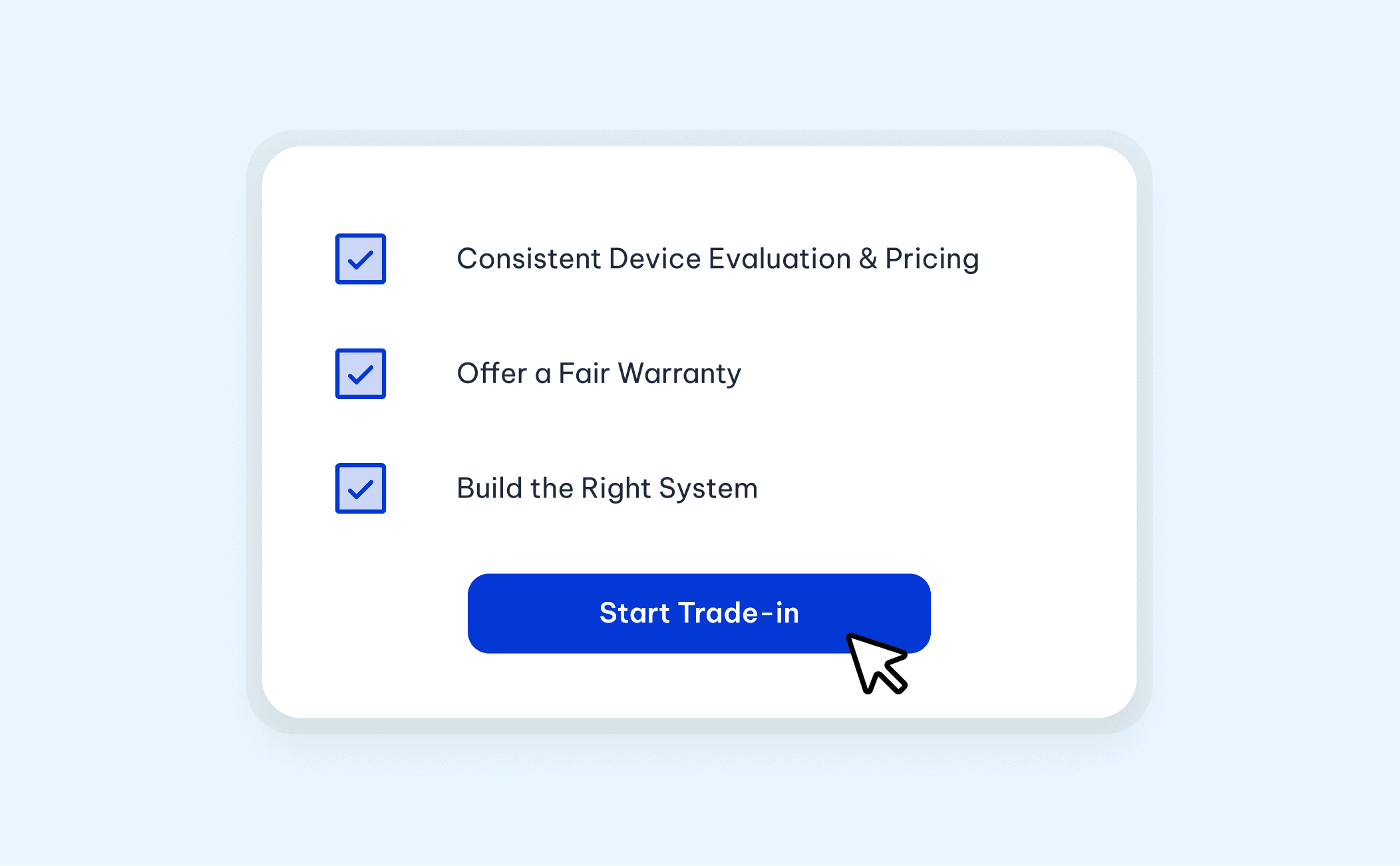
Consistent Device Evaluation and Pricing
Build customer trust with a consistent device evaluation and pricing. iPad repair shops should make the evaluation process clear for both buybacks and trade-ins. Every technician should follow the same standard when evaluating device condition, so similar iPads receive consistent offers regardless of who handles the transaction.
If the repair shop also offers online buybacks and trade-ins, the same pricing criteria should apply online and in-store. The final offer may change after a physical inspection, but customers should clearly understand what affects the value. This consistency creates a more reliable experience and gives customers more confidence in your trade-in program.
Offer a Fair Warranty
A fair warranty can give customers another reason to buy a refurbished iPad from your shop. Even if the device has been inspected and repaired by your technicians, some customers may still hesitate simply because it's not brand new.
The warranty gives them a safety net if something goes wrong after the purchase. Make sure customers know what the warranty covers and how long it lasts. This small reassurance can make buying a refurbished iPad feel as safe as buying a new one.
Build the Right System
Building the right system for buybacks and trade-ins from the start can save your team more work as the business grows, especially if your repair shop plans to offer both online and in-store trade-ins. Customers should have a simple experience wherever they start, while your team should be able to manage everything without jumping between different systems.
Reusely is the right platform that will bring your buyback and trade-in operations into one place, from customer offers and inventory to shipping and payouts. It also provides reporting tools, so your team can track trade-in activity and financial performance without having to put everything together manually.
For customers, Reusely's Buyback Widget can be embedded directly into your existing website. Customers can find their iPad, answer questions about its condition, and get an estimated value online before bringing the device to your store. Your team can then continue the process using the same pricing criteria during the in-store evaluation.
Explore Reusely’s pricing or book a demo to see how Reusely can support your iPad trade-in business.





" width="1304.414px"/></svg>)